
 Character Options
 LEGO
LEGO Flair Leisure
 Hasbro
 Mattel
 MGA
MGA Moose
Moose Spin Master
 Vtech Electronics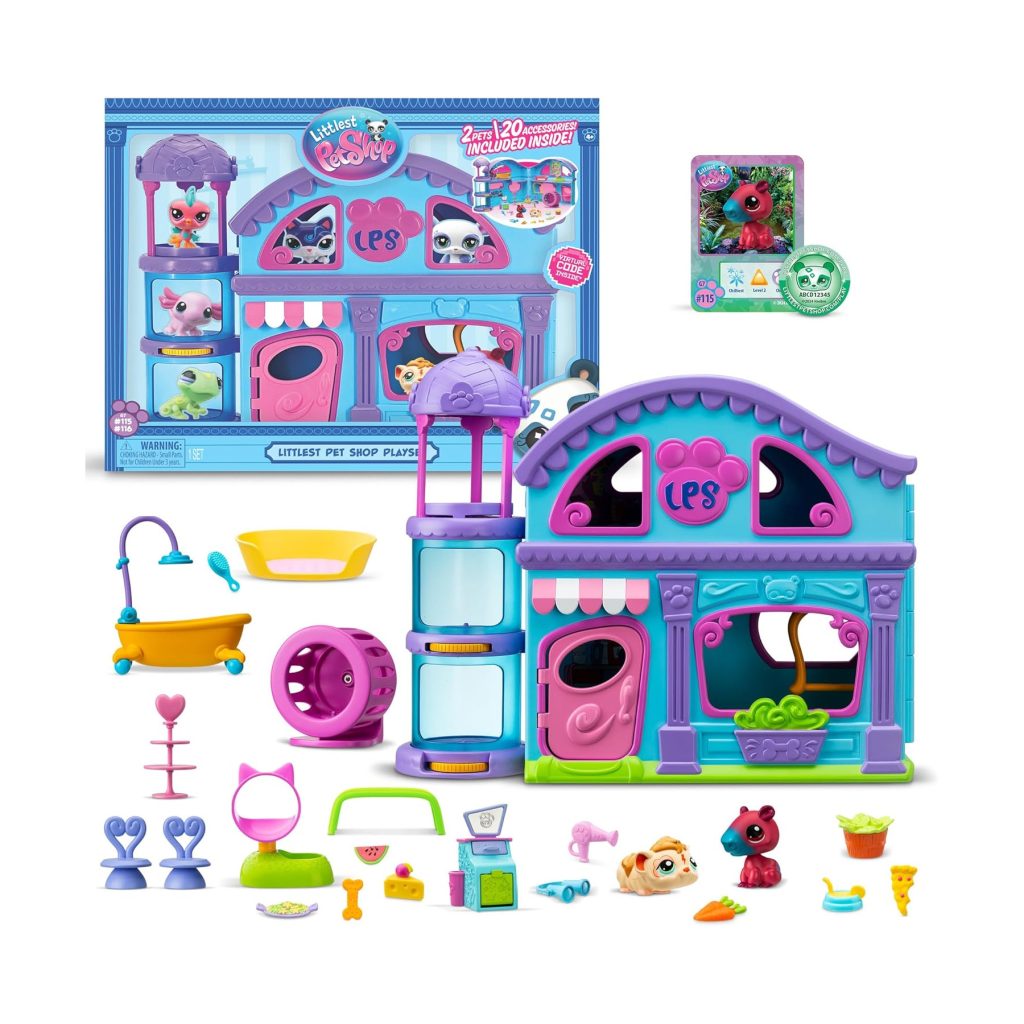
Littlest Pet Shop Pet Shop Playset Parent Guide
Littlest Pet Shop Pet Shop Playset Parent Guide
This Littlest Pet Shop Pet Shop Playset Parent Guide gives parents clear, practical support with setup, assembly, safety, suitability, troubleshooting and storage. For full product details, visit our main Littlest Pet Shop Pet Shop Playset page, or explore hands-on impressions in our Littlest Pet Shop Pet Shop Playset review.
What’s in the Box
A typical set includes the main pet shop structure, floors, themed rooms, modular accessories, stickers, decorative elements and at least one Littlest Pet Shop figure. Some editions include ramps, storage drawers, display stands or small scenery features. Families who enjoy character-based world-building can explore related items through the Littlest Pet Shop brand page, which highlights compatible pets, accessories and themed expansions.
How It Works
The Littlest Pet Shop Pet Shop Playset Parent Guide helps parents understand the structure and flow of play within this multi-room set. Children arrange the included accessories in different areas—such as grooming stations, cosy dens or display spaces—and create imaginative stories for the pet characters. Many versions include moving features like opening doors, slides or rotating platforms that allow children to guide figures from one zone to another.
The modular layout encourages children to customise the shop’s interior. By rearranging furniture, swapping accessories and positioning figures in new scenes, children naturally explore storytelling. Older children may focus on arranging more detailed displays or designing shop “services,” while younger children enjoy simple cause-and-effect actions such as placing pets in lifts or rolling them through doorways.
The playset’s open design supports individual play, sibling collaboration and parent–child storytelling. The wide range of accessories encourages children to speak for the characters, imitate shop routines or create small social interactions among pets. This helps develop language skills, emotional expression and social roleplay.
Setup, Space & Batteries
The set does not require batteries and has minimal setup. Begin by sorting the structures and accessories, then follow the illustrated instructions to attach floors, walls or modular sections. Many parts click into place with small connection points, so encourage children not to force pieces if alignment seems off; adjusting angle often resolves issues.
Choose a clear, flat area such as a table, playmat or bedroom floor. Enough space is needed to spread out accessories and give children freedom to position pets. If stickers are included, consider applying them before assembly to prevent creasing or peeling. Good lighting helps children place small items correctly and reduces frustration when arranging detailed elements.
Because the playset contains many small parts, it works best in an area where these pieces won’t become lost easily. A shallow tray or box can help contain accessories during building or cleanup.
Best Age Range & Suitability
The set is ideal for children who enjoy world-building, creative storytelling and small collectible characters. Many families find it suits ages 4–9. Younger children may focus on simple character placement and repeated interactions, while older children often create more elaborate narratives or structured play scenarios.
Children who enjoy organising spaces, decorating rooms or imagining social roles usually find this playset particularly engaging. It supports careful handling, attention to detail and patience when assembling and arranging small pieces. If your child becomes overwhelmed by too many accessories at once, consider rotating items or keeping some aside for later sessions to maintain focus and reduce clutter.
Safety Notes
As the playset contains small figures and accessories, supervision is recommended for younger siblings. Encourage children to keep pieces away from pets and babies. Ensure structural elements are fully secured before play; loose platforms or half-attached walls may cause pieces to fall unexpectedly.
When using the playset on high surfaces like tables, confirm that all edges are away from drop risks. If children place accessories on the floor, remind them to tidy up after play to prevent tripping hazards. Avoid bending or twisting plastic components beyond their intended range, as this can cause stress marks or cracks.
Durability, Cleaning & Storage
The playset is designed for regular use, but gentle handling extends longevity. To clean surfaces, use a dry or slightly damp cloth and avoid using strong cleaning sprays that may affect stickers or paint. If dust accumulates in small corners, a soft brush works well for detailed cleaning.
For storage, encourage children to gather accessories into a small container or resealable bag. Keeping themed items grouped can help streamline future play and reduce the time spent searching for pieces. Store the main structure in a cool, dry place and avoid placing heavy objects on top of it, as this may warp walls or platforms.
Common Issues & Troubleshooting
- Loose accessories: Many pieces are designed to be repositionable. If they fall too easily, ensure the surface underneath is flat or try using a different configuration.
- Walls not clicking together: Re-align connection points and press gently but firmly. Avoid forcing pieces.
- Figures falling from platforms: Check that surfaces are flat and ensure the platform is fully secured.
- Sticker misalignment: Gently peel and reposition immediately before adhesive sets. Avoid reapplying later as stickers may crease.
- Too many loose pieces for younger children: Reduce the number of accessories available at once or set up the initial scene yourself.
Tips
To get the most from this Littlest Pet Shop Pet Shop Playset Parent Guide, introduce simple story prompts such as “Which pet is visiting today?” or “What job does each pet have?” These scenarios help children build confidence in storytelling and support imaginative thinking.
Some families create themed days—grooming day, training day or adoption day—to help structure play. Others encourage children to rearrange the shop layout occasionally to keep the experience fresh. If your child enjoys displaying their pets, consider providing a small shelf or tray for arranged scenes outside play sessions.
For shared play between siblings, assigning each child a zone or a set of pets can reduce conflict and encourage cooperative storytelling. Encourage turn-taking during more interactive moments such as opening doors or using small mechanical features.
Alternatives
Families who enjoy miniature worlds may also appreciate dollhouses, compact playsets or collectible figure ranges with scene accessories. For children who prefer construction-based play, building sets allow them to design their own structures. For those who enjoy caring roles, pet-themed sets or character-based homes can offer similar levels of imaginative involvement.
Quick FAQs
- Q: Is it suitable for younger children?
A: Yes with supervision, especially due to small parts. - Q: Does it require batteries?
A: No—the set is fully manual. - Q: Are additional pets included?
A: Most sets include at least one figure; others are sold separately. - Q: Does assembly take long?
A: Assembly is straightforward and typically takes only a few minutes. - Q: Can the rooms be rearranged?
A: Many sections are modular, allowing flexible layouts.
Where Next?
For details beyond this Littlest Pet Shop Pet Shop Playset Parent Guide, explore our main Littlest Pet Shop Pet Shop Playset page. For pros, cons and hands-on impressions, visit our Littlest Pet Shop Pet Shop Playset review.
Some links on our site are affiliate links. If you buy through them, we may earn a small commission — at no extra cost to you. 🎄