
 Character Options
 LEGO
LEGO Flair Leisure
 Hasbro
 Mattel
 MGA
MGA Moose
Moose Spin Master
 Vtech Electronics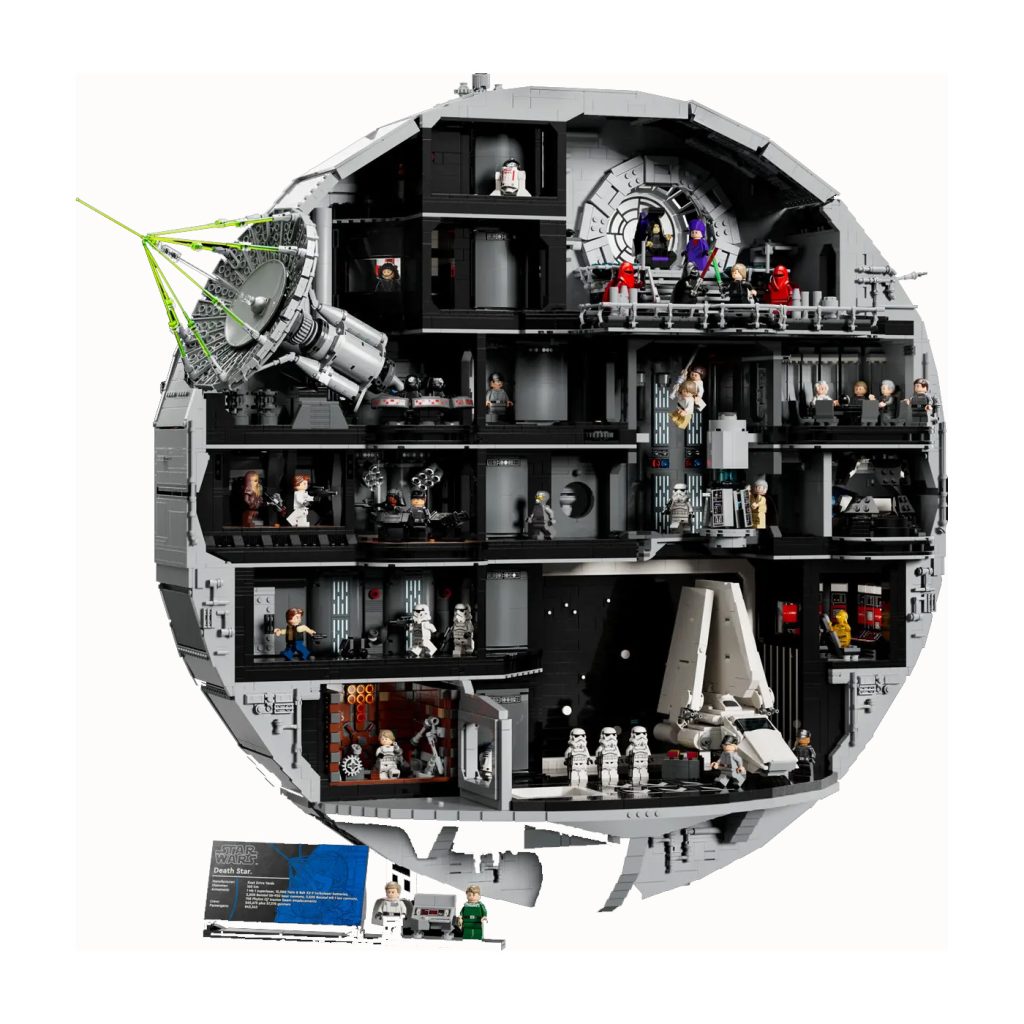
LEGO Death Star Parent Guide
LEGO Death Star Parent Guide
LEGO Death Star Parent Guide gives parents clear, practical information about this complex and detailed build. This guide covers the full experience—setup, difficulty, suitability, stability, storage and safety—so families know exactly what to expect during the building process and long after display.
What’s in the Box
The LEGO Death Star includes multiple build sections, themed room components, decorative details and structural supports that form its spherical design. Depending on the version, it may include interior chambers, control panels, small display elements or character features. The instruction booklet breaks the model into manageable stages to keep progress steady. Parents wanting more manufacturer insight can visit the LEGO brand page for details on building systems and design principles.
How It Works
While shaping this LEGO Death Star Parent Guide, we focused on the way children interact with large, multi-layered LEGO structures. The Death Star is built from the inside outward, starting with core supports and working through rooms, panels and outer shell sections. This approach helps builders see internal spaces come to life before the spherical exterior closes around them.
The set uses a series of interconnected rooms that join onto a central support frame. Builders attach each chamber section-by-section, gradually increasing the model's size and weight. Even though the final model includes recognisable features and small action details, it remains primarily a display or showcase build. Some internal rooms allow gentle posing or imaginative arrangements, but the structure is not designed for rough play.
Because the Death Star becomes heavier as it grows, the building surface must remain stable. The internal supports provide strong reinforcement, but parents should encourage careful handling, particularly during the outer-shell stages where alignment matters most.
Setup, Space & Batteries
No batteries are required. Parents should prepare a wide, flat surface to accommodate brick piles, instruction books and the expanding structure. Sorting pieces by colour or type improves the experience, especially during repetitive stages involving grey elements.
The completed model requires a secure, dedicated display space. Its spherical structure spreads weight evenly, but the model must sit on a firm, flat shelf. Avoid placing it near edges or in high-traffic areas where knocking is likely. For families with curious pets or toddlers, a higher display location is ideal.
Best Age Range & Suitability
The LEGO Death Star is designed for confident builders who enjoy complex, slow-paced construction. Children with experience in multi-bag or multi-section builds will find the structure rewarding. Younger children may enjoy helping with simple interior steps, but booster guidance is needed when attaching intricate sections or aligning curved panels.
This build appeals especially to older children who enjoy thematic displays or who prefer structured, detail-rich tasks. The variety of interior rooms encourages storytelling, while the overall building process strengthens concentration and perseverance.
Safety Notes
This set includes numerous small pieces, making supervision essential for homes with younger siblings. Parents should remind children not to force circular shell components, as misalignment may strain the internal frame. Keeping brick bags sealed until needed prevents pieces from scattering or going missing.
Once displayed, the model should remain stationary. Moving it frequently increases the chance of sections loosening or components detaching. Parents should lift the Death Star from the base—never the top or outer shell.
Durability, Cleaning & Storage
The finished Death Star is structurally strong, but small decorative pieces can detach if handled excessively. Cleaning should be done using a soft, dry cloth or a clean dusting brush. Avoid liquids or cleaning sprays, as moisture can affect clutch strength or settle into gaps between plates.
If families plan to store the model long-term, dismantling it into labelled sections provides the best rebuild experience later. Keeping the instruction booklet and brick bags together prevents confusion when revisiting the build months or years ahead.
Common Issues & Troubleshooting
Some children may struggle with curved sections of the exterior shell. If pieces feel resistant, realigning the underlying support frame typically solves the issue. Small decorative tiles may fall off if the model is bumped; reattaching them firmly usually restores stability.
If the model feels uneven once complete, a slight adjustment of the base or repositioning on a more stable shelf resolves most balance concerns. Builders who lose their place in the manual can cross-check progress by comparing the shape of interior rooms with staged diagrams.
Tips
As highlighted throughout this LEGO Death Star Parent Guide, sorting bricks before starting greatly improves the building flow. Rounds, wedges and tiles benefit from being grouped separately, as these pieces appear in large quantities throughout the build. Taking short breaks between major stages helps children maintain focus, especially during repetitive sections.
Once displayed, parents may choose to place the Death Star on a small stand or tray to prevent slipping on smooth shelves. Some families also enjoy arranging other themed builds nearby to create a cohesive display zone.
Alternatives
Smaller LEGO space sets suit children who prefer quicker builds. Those wanting more play functions may prefer action-based vehicles or buildable character figures. More advanced builders may enjoy exploring other large display models, depending on available space and patience.
Quick FAQs
Is it difficult to build?
It offers a steady challenge suited to experienced builders. This LEGO Death Star Parent Guide recommends supporting younger builders in curved-shell stages.
Does it include minifigures?
Some versions do, while others focus solely on the structure.
Does it open?
Interior sections are visible during building, though access depends on the specific model version.
Is it sturdy?
Yes, when displayed correctly and handled gently.
Does it require batteries?
No, this set is entirely manual.
Where Next?
For a full look at the model and its defining features, visit the main toy page. Parents who want deeper setup insights can continue to the detailed review next.
Some links on our site are affiliate links. If you buy through them, we may earn a small commission — at no extra cost to you. 🎄