
 Character Options
 LEGO
LEGO Flair Leisure
 Hasbro
 Mattel
 MGA
MGA Moose
Moose Spin Master
 Vtech Electronics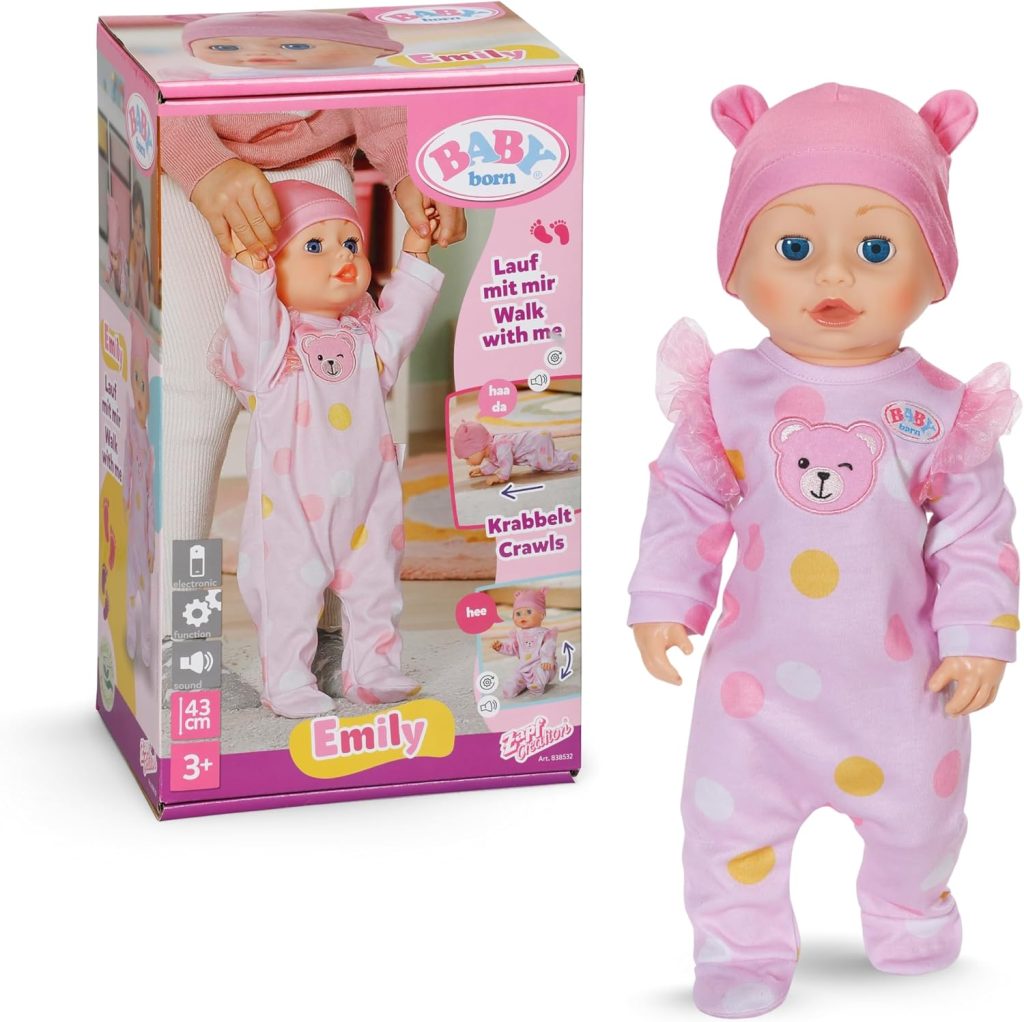
Baby Born Emily First Steps Parent Guide
Baby Born Emily First Steps Parent Guide
Baby Born Emily First Steps Parent Guide offers parents a complete overview of how this interactive doll works, what age groups it suits, how to maintain it, and how to use it safely and confidently at home. This detailed guide focuses on practical insights that help families support imaginative and nurturing play.
What’s in the Box
The Baby Born Emily First Steps doll arrives with its main body, outfit, shoes and a small set of themed accessories. Depending on the version, these may include a bottle, dummy or additional clothing items. The doll’s design features flexible limbs and stability supports for walk-assist modes. For extra background on the manufacturer, parents can visit the Zapf brand page, which outlines the wider range of nurturing and role-play dolls produced by the company.
How It Works
While developing this Baby Born Emily First Steps Parent Guide, we explored how the doll’s interactive features support early role-play. Children can hold the doll’s hands to encourage simple walking movements, allowing them to guide Emily steadily across the floor. The doll’s body is designed with balance points that help stabilise movement, though younger children may still require support to prevent falls.
Emily’s flexible limbs help children position her for feeding, comforting or pretend bedtime routines. The doll’s height and proportions mimic a manageable toddler-like size, making it easier for children to carry and care for. Many young children naturally treat the doll as a companion or sibling figure, which helps them practise empathy, responsibility and gentle handling.
Unlike electronic dolls with complex sound or motion mechanics, Emily focuses on simple physical interaction. This makes her accessible for a wide range of ages, requiring no learning curve beyond basic hand-over-hand support for walking. Because the toy depends on child-led movement rather than programmed actions, children quickly adapt their own imaginative scenarios without frustration.
Setup, Space & Batteries
There is no major setup required beyond removing packaging and ensuring the doll’s outfit fits comfortably. Some versions may require batteries for subtle sound or light functions, though many operate entirely without electronics. Parents should check the packaging to confirm whether batteries are included or needed.
For best results, use the walk-assist feature on smooth indoor flooring. Thick rugs or uneven surfaces may limit movement or cause the doll to tip. If children want to use Emily outdoors, keeping her on clean, dry ground helps prevent dirt from affecting joints or clothing. For storage, hanging the doll on a peg or placing it in a soft basket helps maintain shape and cleanliness.
Best Age Range & Suitability
This doll suits a broad age range, from toddlers who enjoy simple role-play to older children who like creating extended imaginative scenarios. The walk-assist feature appeals especially to children who are confident walkers themselves, as it mirrors the rhythm of guiding a toddler’s first steps. Younger users may need help balancing the doll upright, but older preschoolers can often manage this independently.
Emily also supports social play. Children may take turns helping the doll walk, feeding her or organising small pretend routines. Because the toy relies on gentle movement rather than loud sounds or lights, it works well in quieter shared environments such as classrooms or family rooms.
Safety Notes
Parents should supervise younger children during walk-assist play, as toddlers may attempt to lean on the doll for support. The doll should never replace a stable walking aid. Regular checks of limb joints and clothing fasteners help prevent minor issues, and any battery compartments must be secured properly. Avoid placing the doll near heaters, as some materials may warp under high heat.
If the doll becomes damp, allow it to air-dry thoroughly to avoid mildew or odour. Children should be encouraged not to drag the doll by the arms or legs, as this can loosen joints over time.
Durability, Cleaning & Storage
Baby Born dolls generally use robust materials designed for frequent handling. Emily’s surface can be wiped with a soft cloth and mild soapy water. Clothing items can often be washed separately on a gentle cycle, though parents should check care labels first. The walking mechanism remains long-lasting when children support the doll gently. Avoid using the feature on rough outdoor surfaces, as this may scuff the shoes or cause wear on the doll’s feet.
For long-term storage, a ventilated container or open shelf helps maintain dryness. Parents who rotate toys may find that storing accessories in a labelled pouch prevents items from going missing, keeping the full set ready for extended play sessions.
Common Issues & Troubleshooting
Most concerns relate to walking stability. If the doll tips frequently, check for uneven flooring or encourage children to hold both hands evenly. If limbs become stiff, gently rotating the joints usually restores smooth movement. Clothing that feels tight can be loosened by adjusting fasteners or smoothing internal seams.
Marks on the doll can often be removed with mild soap and warm water. If clothing shrinks or loses shape, air-drying and gentle stretching helps restore fit. Batteries, if used, should be replaced at the first sign of dimming lights or inconsistent sound.
Tips
To support imaginative play, parents can introduce simple prompts such as “Shall we help Emily get ready for her walk?” or “Where would Emily like to go today?” As emphasised in this Baby Born Emily First Steps Parent Guide, encouraging gentle support during walk-assist play improves both safety and enjoyment. Setting up small pretend environments—such as a mini nursery corner or feeding area—keeps play varied and engaging.
Families can also rotate outfits or accessories to keep routines fresh. Using a small basket for Emily’s clothing helps children learn tidiness and responsibility.
Alternatives
Families seeking similar dolls may consider other walk-assist or nurturing dolls from the same brand or comparable ranges. Dolls that focus on feeding, bathing or bedtime routines offer different play strengths depending on the child’s preferences. When comparing alternatives, consider weight, height and whether the doll needs batteries.
Quick FAQs
Does Emily require batteries?
Some versions include light or sound features that use batteries. Always check the packaging. This Baby Born Emily First Steps Parent Guide recommends securing all battery compartments.
Is it suitable for toddlers?
Yes, with supervision during walk-assist play.
Can the doll be washed?
Surface cleaning works best; clothing can usually be washed gently.
Is it heavy?
The doll is lightweight enough for most children to carry independently.
Does it stand on its own?
No, children must support the doll during walking activities.
Where Next?
For a full overview of the doll and its main features, visit the main toy page. Parents wanting more detailed insights and setup notes can continue to the detailed review next.
Some links on our site are affiliate links. If you buy through them, we may earn a small commission — at no extra cost to you. 🎄