
 Character Options
 LEGO
LEGO Flair Leisure
 Hasbro
 Mattel
 MGA
MGA Moose
Moose Spin Master
 Vtech Electronics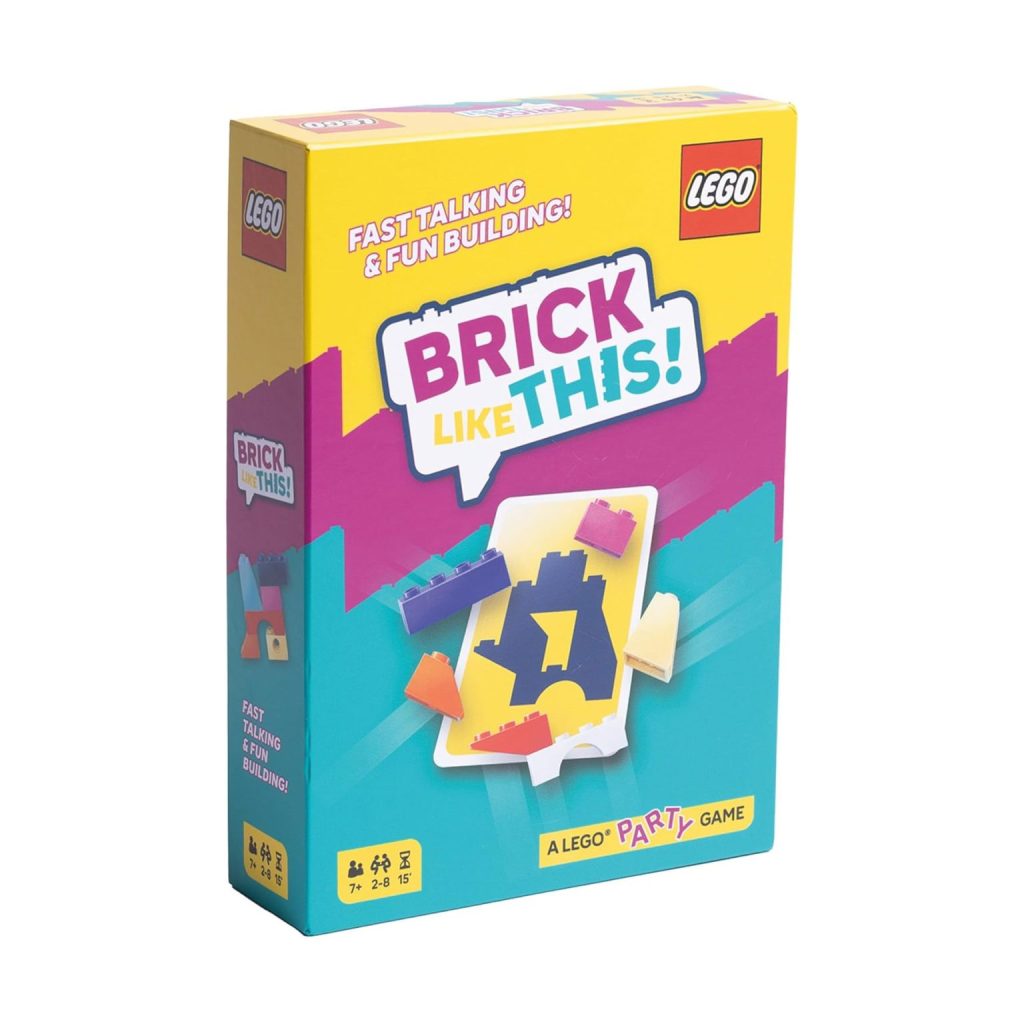
Asmodee Brick Like This Parent Guide
Asmodee Brick Like This Parent Guide
Asmodee Brick Like This Parent Guide gives parents a clear understanding of how this fast-paced building game works at home, covering setup, space, safety, age suitability, and practical usability. This guide is designed to help families decide how the game fits into daily play routines and how to support children as they learn its mechanics.
What’s in the Box
The game includes a deck of challenge cards, a set of building blocks, and a simple instruction sheet. Each component is designed for quick, repeated handling so families can move smoothly from one round to the next. The pieces are intentionally lightweight and sized to support rapid building during timed rounds.
Parents who want background on the maker behind the game can explore the Asmodee brand page. Understanding the publisher helps when comparing this title to other family-friendly games in their catalogue, especially if you prefer brands known for simple rules and durable components.
How It Works
While developing this Asmodee Brick Like This Parent Guide, the focus was on how the game functions during real play. A player draws a challenge card showing a structure or shape, then attempts to build it within a set time. Other players watch, guess, or wait to take their turn, depending on the variation you choose. Because rounds are short, everyone remains involved throughout the session.
The game’s challenge lies in translating flat card images into three-dimensional builds. Children practise spatial awareness, fine motor control, and quick decision-making without feeling pressured by complex rules. Families can adjust difficulty by sorting the challenge cards into easy and hard groups, removing the timer, or allowing players extra preparation time.
Setup, Space & Batteries
Setup is minimal. Clear a firm surface, place the blocks within reach, shuffle the cards, and decide whether you’ll use a timer. A coffee table or dining table provides enough room for building and card management. Because rounds can be energetic, using a stable surface helps prevent accidental knocks.
The game typically does not require batteries, making it low-maintenance and ideal for households avoiding electronic toys. If playing on carpet, consider placing a tray or board underneath to stabilise pieces. A play mat or small non-slip base also helps younger children who are still developing coordination.
Best Age Range & Suitability
Brick Like This is best suited for children aged 7 and up who enjoy building challenges and simple competitive play. Younger children may also join if you remove the timer and select the simplest cards. Many families begin with relaxed practice sessions until everyone is comfortable with the building mechanic.
The game works well for mixed-age groups because older children can take on tougher cards while younger ones handle easier builds. Its short round format makes it suitable for after-school play, weekends, or short bursts between other activities. Children who like puzzles, building, or creative challenges tend to engage strongly with the format.
Safety Notes
The building blocks are small and may pose a choking risk to toddlers. Supervision is essential in households with children under three. After each session, ensure all pieces have been collected to prevent younger siblings from accessing loose components.
Cards can be easily bent, so store them away from drinks or messy surfaces. If your edition includes a battery-powered timer, check that the compartment is secured and that batteries are replaced responsibly when needed.
Durability, Cleaning & Storage
The blocks are generally sturdy and designed for repeated stacking and repositioning. They hold up well under frequent use, though stepped-on pieces may show marks. The challenge cards are more delicate, so keeping them in a small container or zip bag helps maintain their shape over time.
Cleaning is simple: wipe blocks with a damp cloth as needed. Avoid harsh cleaners or soaking components, especially printed items. Families with limited storage space may prefer to separate blocks into small tubs or trays so children can find the pieces quickly without emptying the entire box.
Common Issues & Troubleshooting
Structures fall over too easily: Use a firmer surface or encourage a wider base when building. Practise without the timer until children understand how to stabilise shapes.
Challenge cards feel too difficult: Sort cards into difficulty levels and start with the simplest group. You can also relax time limits or allow players to preview the card for longer.
Arguments about scoring or rules: Agree on a scoring method at the start or remove scoring entirely to emphasise teamwork. Many families prefer a cooperative mode for younger children.
Tips
As highlighted in this Asmodee Brick Like This Parent Guide, adapting the game to your child’s ability level makes sessions smoother and more enjoyable. Try cooperative rounds first so children understand how structures fit together before introducing competition.
You can also create variations such as memory rounds (briefly show the card before removing it), relay builds where each player adds one piece, or “design your own card” sessions for creative children. These options help extend the game’s lifespan and keep older children engaged.
Alternatives
If your child enjoys construction-based challenges, consider games that involve matching patterns, stacking shapes, or building against the clock. These offer similar developmental benefits while varying the type of challenge. Families who prefer slower-paced games may enjoy puzzle tiles or logic games with step-by-step difficulty progression.
Compact building games are helpful for households with limited storage space. When comparing alternatives, look at the number of components, table-space needs, and whether the game supports both solo and group play.
Quick FAQs
Is the game suitable for younger children?
Yes, but remove the timer and choose simpler cards. Close supervision is essential due to small pieces.
How long does a typical session last?
Most families play for 15–30 minutes, completing several rounds.
How do we reduce mess?
Use bowls or small trays to contain blocks during play for easier cleanup.
Does this support learning?
Yes. The game reinforces spatial awareness, attention, and problem-solving within a light, social setting.
What does the Asmodee Brick Like This Parent Guide cover?
It explains setup, safety, organisation, difficulty adjustments, and solutions to common issues.
Where Next?
Explore the full product details on the Asmodee Brick Like This page.
For hands-on impressions and in-depth observations, visit the Asmodee Brick Like This Review.
Some links on our site are affiliate links. If you buy through them, we may earn a small commission — at no extra cost to you. 🎄