
 Character Options
 LEGO
LEGO Flair Leisure
 Hasbro
 Mattel
 MGA
MGA Moose
Moose Spin Master
 Vtech Electronics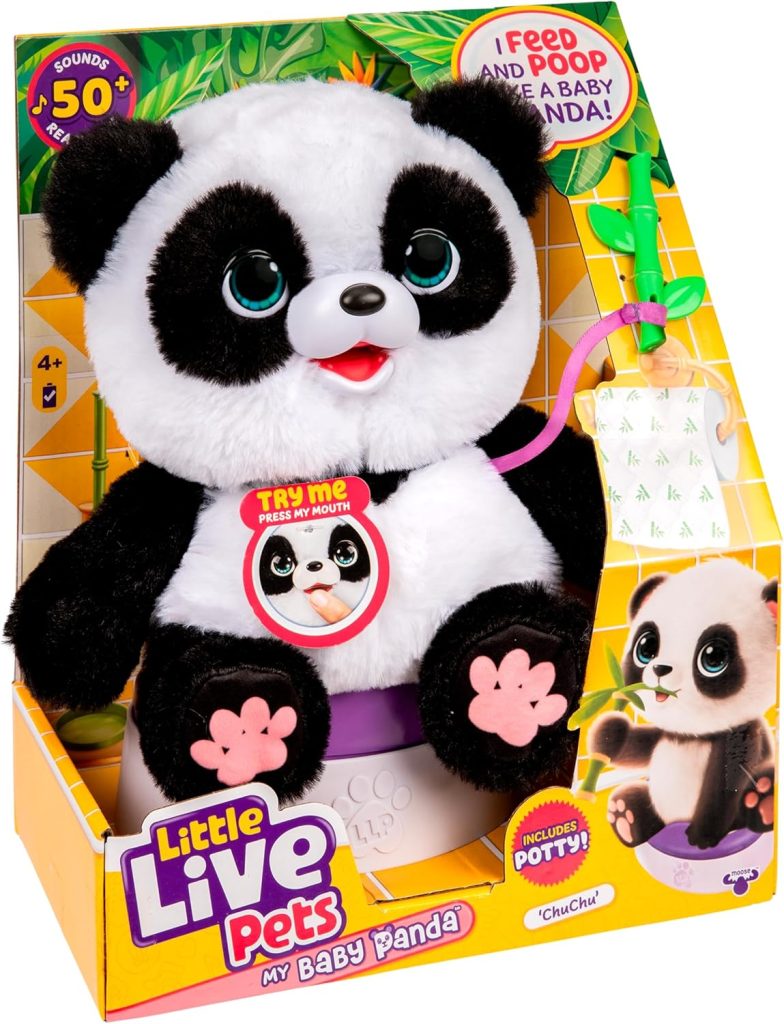
My Baby Panda Parent Guide
My Baby Panda Parent Guide
My Baby Panda Parent Guide provides parents with a clear, practical understanding of how this interactive companion works, what age groups it suits, and how to maintain it for long-lasting enjoyment. This guide focuses on real-world usability so families can support confident, imaginative play at home.
What’s in the Box
My Baby Panda typically includes the main panda companion, themed accessories such as a bottle or small comfort item, and instructions that outline the interactive features. The plush-style body and expressive elements help bring the panda’s personality to life. Parents seeking wider brand context can browse the Moose brand page to explore similar products and play philosophies.
How It Works
While developing this My Baby Panda Parent Guide, we examined how children naturally interact with nurturing-style animal companions. My Baby Panda often features simple sound responses, movement reactions or light sensor triggers depending on the version. These aim to create predictable cause-and-effect moments that children understand quickly.
Features may include gentle head movement, blinking, light-up responses or soft audio cues. Children can feed the panda using the included accessory, and certain actions may trigger specific reactions. These predictable patterns help children develop conversational play, sympathetic responses and early nurturing skills.
The panda’s compact size and manageable weight allow younger children to carry it easily from room to room. Because functions are child-led and require minimal instruction, most children adapt to the toy within minutes.
Setup, Space & Batteries
Most versions of My Baby Panda require batteries, which are usually installed inside a secure compartment. Parents should follow the instructions carefully and ensure the compartment is fully closed before play. Once activated, the panda begins responding to touch, movement or light depending on its sensors.
The toy requires no additional setup and can be used anywhere indoors. For best performance, place it on smooth surfaces and keep it away from water or outdoor areas. If the panda includes light sensors, dimly lit environments may reduce responsiveness.
Best Age Range & Suitability
My Baby Panda suits younger children who enjoy gentle pretend play. The toy’s predictable responses help little ones understand simple sequences such as feeding, comforting or talking to the panda. Older children may enjoy imaginative scenarios but usually engage most during the early nurturing stages.
The panda works well in both solo and shared play environments. Children can take turns feeding or comforting the companion, and the toy’s neutral design encourages calm, cooperative play.
Safety Notes
Parents should periodically check battery compartments, stitching around plush areas and any movable components. Younger children should not attempt to open battery sections or pull at ears or limbs. Keep the toy away from pets, as plush sections can attract chewing or mouthing.
Supervision is recommended for toddlers, especially when the panda produces sound or movement that might encourage rough handling.
Durability, Cleaning & Storage
My Baby Panda features a combination of plush and plastic components. The soft areas can be surface-cleaned using mild soapy water and a cloth. Avoid submerging the toy, as internal components may be affected. Plastic parts can be wiped clean quickly, and accessories should be stored in a small container to prevent loss.
For storage, keep the panda away from direct heat sources and dusty areas. Turning the toy off between sessions helps preserve battery life. If the plush areas accumulate dust, a gentle brush or vacuum with a soft attachment can refresh the surface.
Common Issues & Troubleshooting
If the panda becomes unresponsive, checking or replacing batteries usually resolves the issue. Ensure all switches are in the correct position and that sensors are not obstructed. If movement features appear stiff, lightly cleaning connection points or repositioning the toy may help.
Any repeated sound or light errors may come from loose batteries or low power. Replacing them promptly prevents inconsistent behaviour. Surface dirt or food marks can be removed with gentle spot cleaning to avoid damaging the plush.
Tips
As highlighted throughout this My Baby Panda Parent Guide, parents can support meaningful play by introducing simple routines such as “panda nap time,” “feeding time” or “calm time.” These routines help children structure their play in a clear, reassuring way.
Setting up a small “panda corner” with a soft mat or blanket gives the toy a defined home and helps children learn tidiness. Rotating accessories or adding pretend play items like tiny blankets enhances variation and keeps sessions engaging.
Alternatives
Families looking for other nurturing-style companions may consider interactive pets, plush animals with voice responses or simpler comfort toys depending on the child’s preference. For children who enjoy active play, a toy with movement-based interactions may offer better engagement.
Quick FAQs
Does it require batteries?
Yes, most versions do. This My Baby Panda Parent Guide recommends checking compartments regularly.
Is it suitable for younger toddlers?
Yes, with supervision around small accessories.
Can it be washed?
Plush areas can be surface-cleaned only.
Does it move?
Some versions include simple movement or sound reactions.
Is it fragile?
The toy holds up well with gentle handling.
Where Next?
For a full overview of the toy and its core features, visit the main toy page. Parents seeking deeper insights can continue to the detailed review next.
Some links on our site are affiliate links. If you buy through them, we may earn a small commission — at no extra cost to you. 🎄